Multi-channel vs omnichannel: What is the difference and which one do you need
Multi-channel and omnichannel OMS are not the same things. Understand the key differences in inventory management, order routing and fulfilment and find out which one your retail business actually needs.
Garima Poddar
Retail today is no longer limited to one store, one website, or one marketplace. Customers now move between apps, websites, social platforms, marketplaces and physical stores without thinking twice. They expect the same product availability, delivery timelines and service quality everywhere.
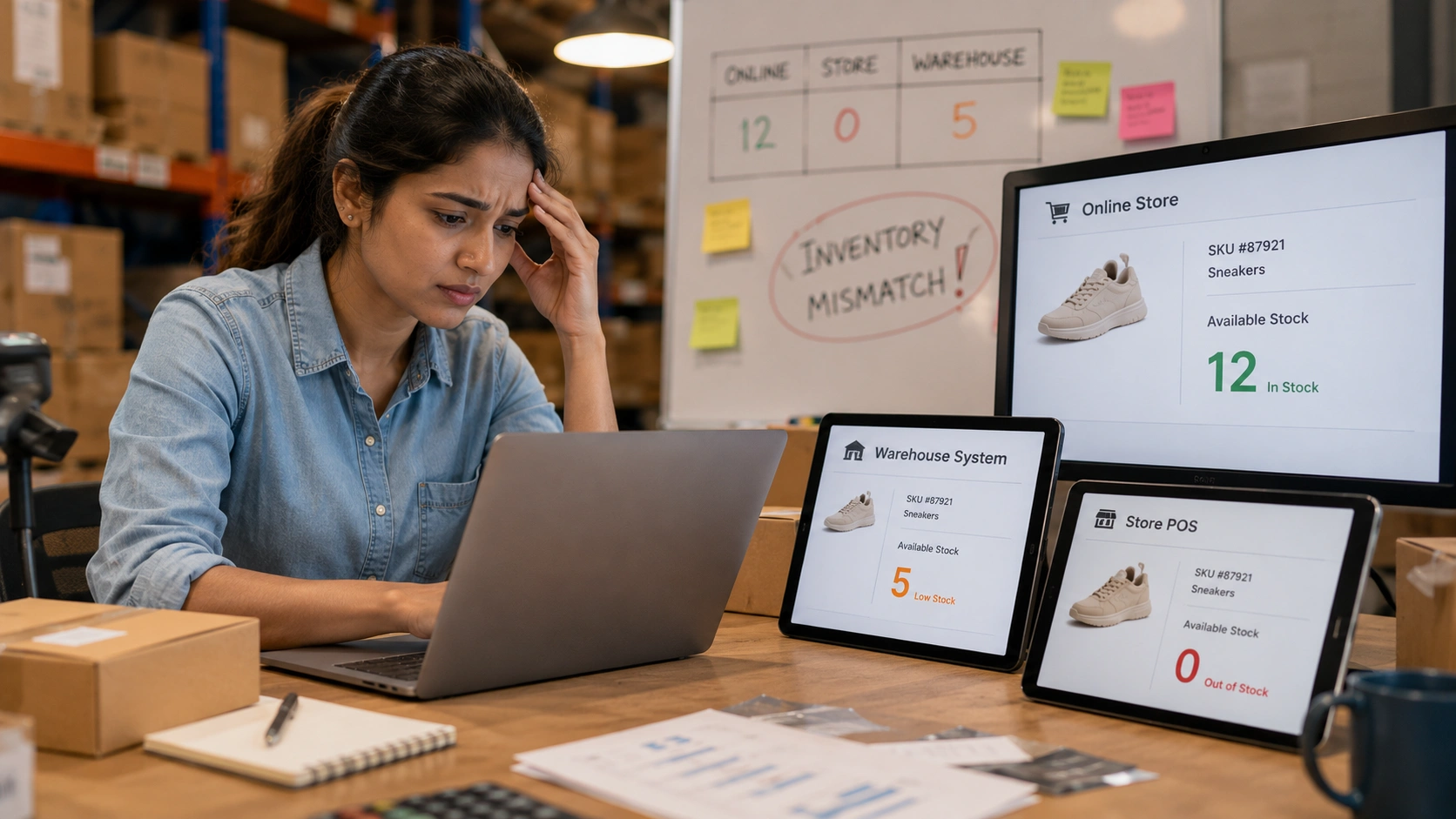
But for retailers, this creates a different reality behind the scenes: disconnected inventory, delayed order updates, stock mismatches and fragmented fulfillment operations.
This is where the conversation around multichannel vs. omnichannel OMS becomes important.
Many businesses assume the two are the same. They are not.
And understanding the difference can directly impact customer experience, operational efficiency and long-term growth.
What is omnichannel order management?
An order management system (OMS) is the operational layer that manages how orders are received, processed, routed, fulfilled, tracked and returned across sales channels.
A modern OMS helps businesses:
Manage inventory across locations
Process orders from multiple channels
Automate fulfillment workflows
Reduce stock inconsistencies
Improve delivery speed
Enable returns and exchanges efficiently
As retail operations expand across channels, the OMS becomes the central system that keeps everything connected.
What is a multi-channel OMS?
A multi-channel OMS helps businesses sell across multiple channels, like
Brand websites
Marketplaces
Physical stores
Social commerce platforms
Mobile apps
But here is the catch: each channel often operates independently. Inventory, order flows, promotions and fulfillment logic may remain separated across systems.
Example of multi-channel retail
A retailer may:
Sell on Amazon
Run a Shopify store
Operate offline stores
But each channel has separate inventory visibility and fulfillment processes.
An order placed online may not reflect real-time store inventory. A customer may not be able to return an online purchase at a physical store. Customer data may remain fragmented across channels.
The business is present everywhere, but the experience is disconnected.
What is an omnichannel OMS?
An omnichannel OMS connects all channels into one unified ecosystem.
Instead of managing channels separately, the system synchronizes inventory, orders, fulfillment and customer experiences across every touchpoint.
This means customers can:
Buy online and pick up in-store
Return online purchases at a store
Check real-time inventory availability
Receive consistent delivery experiences
Move between channels without friction
Behind the scenes, inventory and order data flow through a centralized system. That is the fundamental shift from multi-channel to omnichannel.
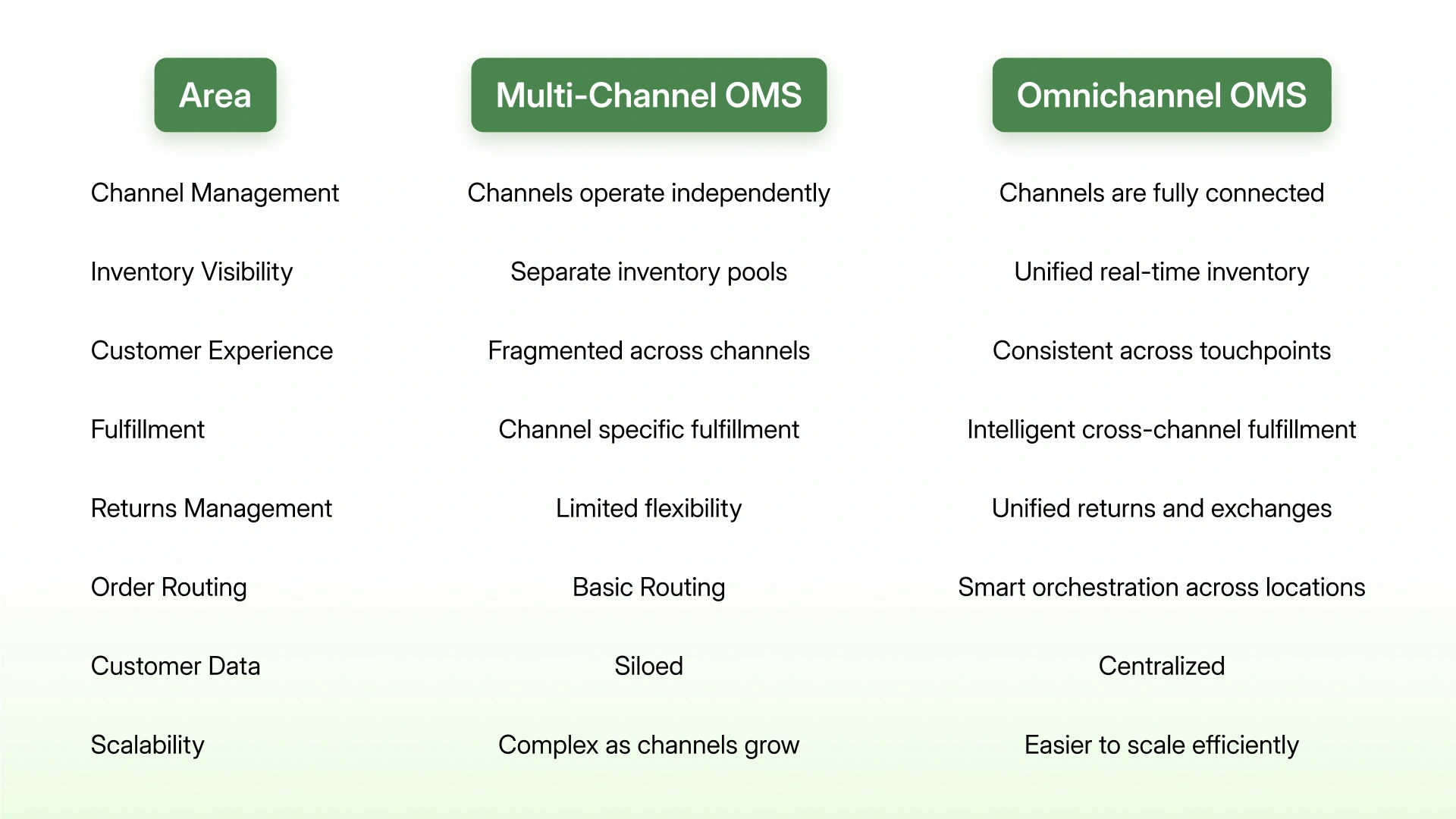
Multi-Channel vs Omnichannel OMS: Key Differences
The real problem with multi-channel operations
Multi-channel systems work well in the early stages of growth.But as operations scale, retailers often face challenges like:
Inventory inaccuracy: When inventory updates are delayed across channels, businesses oversell products or miss sales opportunities.
Operational silos: Different teams manage different channels with separate systems and workflows.
Slow fulfillment: Orders are not routed intelligently based on inventory proximity or fulfillment capacity.
Poor customer experience: Customers receive inconsistent experiences depending on where they shop.
Higher operational costs: Manual coordination across systems increases inefficiencies and delays.
These issues become even more visible during peak sale periods, festive demand spikes, or large-scale marketplace operations.
Why Omnichannel OMS is becoming essential
Customer expectations have changed. Today’s shoppers expect convenience, flexibility and speed by default.
They want:
Same-day delivery
Real-time order tracking
Flexible returns
Consistent experiences across channels
Accurate inventory availability
This is difficult to achieve with disconnected systems.
An omnichannel OMS solves this by creating a centralized operational framework where inventory, orders, and fulfillment work together in real time.
What a modern omnichannel OMS should offer
Not all OMS platforms are designed for modern retail complexity. A strong omnichannel OMS should support:
Unified inventory visibility: A centralized view of inventory across warehouses, dark stores, retail outlets and marketplaces.
Intelligent order orchestration: Automatically routing orders based on:
Inventory availability
Delivery timelines
Store proximity
Fulfillment costs
Ship-from-store capabilities: Using physical stores as fulfillment centers to reduce delivery times and optimize inventory usage.
Real-time visibility: Tracking orders, inventory movement, returns and fulfillment status across all channels.
Flexible fulfillment models:
Supporting:
BOPIS (Buy Online, Pick Up In Store)
Hyperlocal delivery
Marketplace fulfillment
Endless aisle experiences
Seamless integrations: Connecting with ERPs, marketplaces, POS systems, logistics partners and ecommerce platforms.
How Fynd helps retailers move beyond multi-channel complexity
As retail operations grow, managing disconnected systems becomes unsustainable. Fynd is built to solve exactly this challenge.
Fynd OMS centralizes order and inventory management across e-commerce, marketplaces, warehouses and physical stores through a unified omnichannel framework.
With Fynd, businesses can:
Get real-time inventory visibility
Enable ship-from-store operations
Automate order routing
Manage fulfillment centrally
Reduce stock inconsistencies
Improve delivery efficiency
Support omnichannel customer journeys
What makes the platform especially valuable is its ability to simplify operational complexity while supporting scale.
Instead of adding more disconnected tools as the business grows, retailers can manage operations through one connected ecosystem.
Multi-channel or omnichannel: Which one should businesses choose?
The answer depends on growth goals. A multi-channel setup may work for businesses with:
Limited operational complexity
Fewer fulfillment locations
Early-stage expansion plans
But for retailers aiming to scale across channels while maintaining customer experience consistency, omnichannel becomes the stronger long-term approach.
Because eventually, the challenge is not just selling through more channels. It is managing all of them efficiently together.
Final thoughts
The difference between multi-channel and omnichannel OMS is not just technical. It directly affects how efficiently a business operates and how consistently customers experience the brand.
Multichannel helps businesses expand presence.
Omnichannel helps businesses connect operations.
As customer expectations continue to rise, retailers need systems that can unify inventory, fulfillment and customer journeys in real time.
That is where modern platforms like Fynd OMS play a critical role by helping businesses simplify operations, improve fulfillment agility and build scalable omnichannel retail experiences.
See how Fynd OMS can help your business streamline operations, reduce fulfillment complexity, and scale faster with a connected omnichannel approach. Book a demo now!
Empower your business, every step of the way
Discover the right partners to support your business needs
~t.compress(q:75)/cms_uploads/blog_multi-channel-vs-omnichannel-what-is-the-difference-and-which-one-do-you-need.webp)