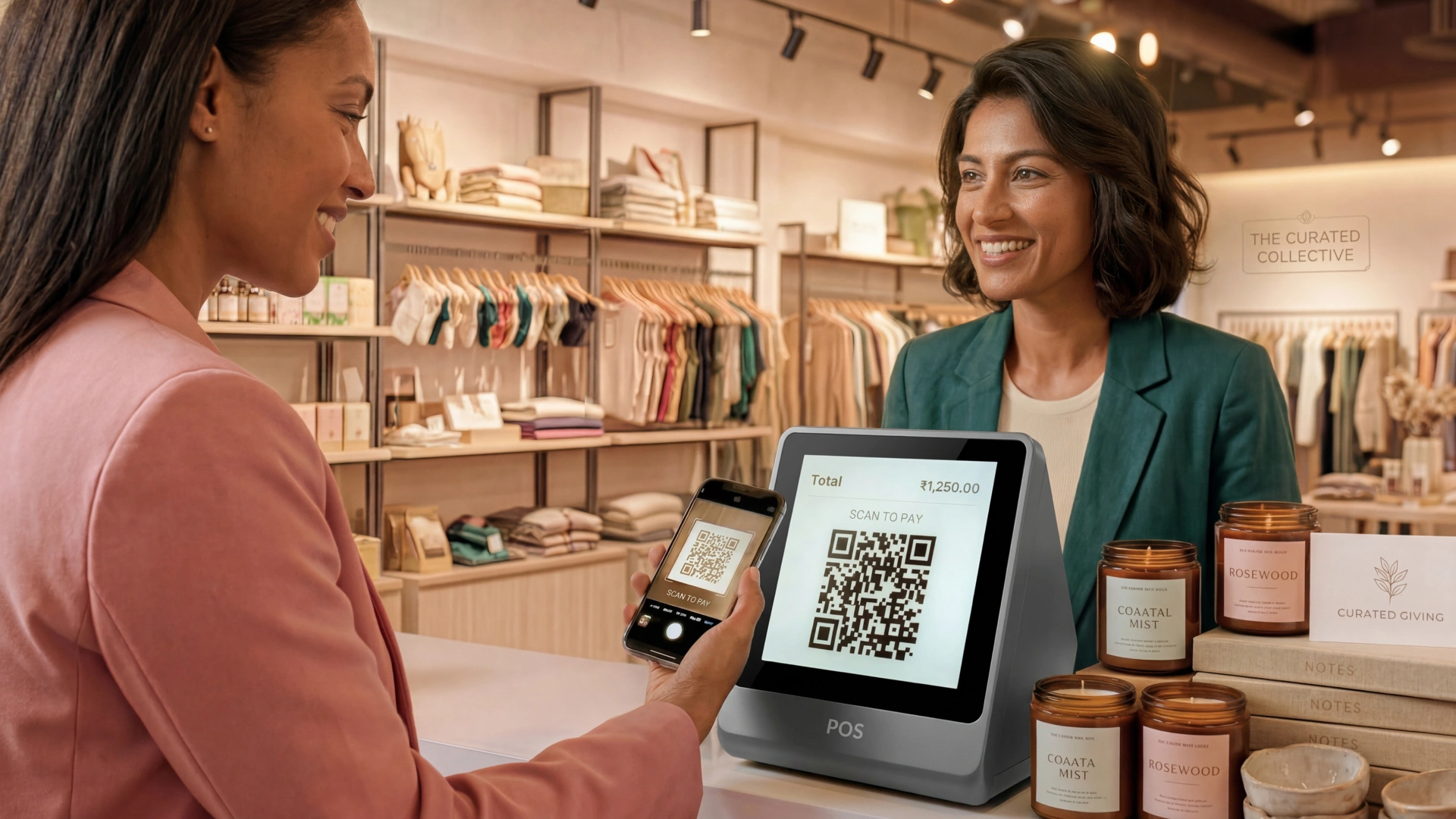
AI in retail is reshaping the competitive retail landscape faster than most retailers anticipated. It is not just for big companies anymore. Now, you can find AI at the checkout, in the stockroom, and on the sales floor. It is quietly making staff jobs easier, improving customer experiences, and helping managers make better decisions right away.
The numbers back this up. Salesforce’s Connected Shoppers Report says 75% of retailers believe AI agents will be key for staying competitive by 2026.
Retailers are switching because old systems cannot keep up with what modern retail needs.
It is a checkout system where AI is built into the core architecture, not layered on as an add-on module. Inventory, checkout, customer data, product recommendations and store analytics are all integrated to operate together, learn from real-time data and surface information when it is most beneficial.
It understands patterns, predicts what is coming and helps retailers act before problems occur or opportunities pass.
For retailers managing multiple stores, multiple channels and customers who expect the same experience whether they shop online or in-store, the distinction matters enormously.
How retailers are using smart POS systems today
If you are wondering where AI-native POS helps first, look at the common problems you already know.
In-store operations
AI is helping store teams run with greater precision and far less guesswork.
- Real-time inventory visibility: Every store, warehouse and online channel sees the same up-to-date stock.
- AI-driven product recommendations: At checkout, the system suggests items based on what is in the cart, what the customer bought before, and what similar shoppers chose.
- Faster checkout: AI-native platforms work on any device - tablet, phone or fixed terminal. Staff can help customers anywhere in the store.
Customer experience
AI is giving retailers the ability to make every customer feel known even during a first visit.
- Loyalty management and personalization: Staff can identify a customer at checkout, apply loyalty rewards and offer personalized promotions without switching screens or asking the customer to open a separate app.
- Clienteling beyond the store visit: Store associates can proactively reach out to customers via personalized carts, chat or curated links, building relationships that extend well beyond the in-store moment.
- Omnichannel service: Customers can return an online order at the store, pick up a purchase ordered on the website or have a store associate fulfill an order from a different location's stock.
- Seamless cross-channel recognition: A customer's purchase history, preferences and loyalty status follow them across every channel and every store location so the experience feels consistent, not disconnected.
Real-world results from Fynd AI-native POS
Retail POS with AI is already delivering measurable outcomes for retailers who have made the shift. Here are a few patterns that consistently emerge.
Reduced lost sales from stockouts: Retailers using real-time cross-store inventory visibility reports 10-12% fewer lost sales due to out-of-stock situations. When staff can see and access inventory across the entire network, the walk-out rate drops significantly.
Faster checkout, higher throughput: Brands running on AI-driven POS platforms report average checkout times under 30 seconds. For stores with high footfall, that reduction directly improves conversion and reduces queue-related customer drop-off.
Higher basket size through intelligent recommendations: AI-driven product suggestions at checkout increase average order value without requiring additional staff effort. The system does the upselling, the staff confirms and closes.
Faster staff onboarding: Because AI-native platforms are intuitive, device-agnostic and cloud-provisioned, new staff can be trained 40% faster than on legacy systems. New stores go live in days, not months.
Omnichannel fulfillment without integration overhead: Retailers who move to AI-native POS eliminate the fragile, costly integrations required to connect separate in-store and online systems. Ship-from-store, pickup-in-store and cross-channel returns all work natively from day one.
Here are the benefits of AI POS
Switching to an AI-native POS delivers value across operations, customer experience and business growth. Here is how
- One source of truth across every channel: It connects inventory, customer data and order management across all stores and online channels in real time.
- A complete view of every customer: With access to purchase history, loyalty data and service records at the POS, staff can treat every customer as a regular. This is not just good service, it is a strategic advantage.
- Intelligence that drives action, not just reports: Traditional POS systems make reports. AI-native platforms give insights. Managers see live performance by store, staff, product and hour.
- Operations that scale without adding complexity: Cloud-based systems mean new stores can be set up in days. The platform runs on any device, handles busy times and connects with other business systems using open APIs.
How to evaluate an AI-native POS
Not every platform that says “AI” is truly AI-native. There is a big difference between a system built to connect online and offline from the start and one where those links were added later.
Is the omnichannel retail architecture native or integrated?
There is a meaningful difference between a system designed from the start to unify online and offline and one where those connections were patched in later. Ask whether inventory sync, ship-from-store and cross-channel returns work out of the box or require third-party connectors.
How does it handle inventory across locations?
A genuine AI-native platform gives staff and managers a live view of stock across every store and warehouse simultaneously. If real-time inventory tracking requires a separate system or a manual sync, that is a gap worth noting.
What does the AI actually do at the point of sale?
Push past the marketing language. Ask specifically: does the system surface product recommendations at checkout? Does it flag inventory risks automatically? Does it show live performance data to managers in real time?
How does it scale?
A platform that works well at 10 stores should be evaluated at 100 or 500 - especially during peak sales periods. Ask about uptime track records and how the system performs during festive seasons.
How fast is deployment?
Modern AI-native platforms onboard new stores in days, not months. If a vendor is quoting a multi-month rollout timeline, that is worth examining closely. Cloud provisioning and device-agnostic design should make new store activation fast and straightforward.
What does support look like at scale?
Beyond the initial rollout, ask about ongoing SLA commitments, real-time monitoring and on-ground support availability. For retailers with large store networks, the quality of operational support is as important as the features.
One last thing worth knowing
Modern retail demands more than a billing system. It demands a platform that connects your stores, your data and your customers and gives every team member the intelligence they need to act in the moment.
AI-native POS platforms are delivering that for retailers across India and globally. The shift is already happening. Retailers who move now are building an operational foundation that will compound an advantage over the next several years. Those who wait are not standing still; they are simply making the gap harder to close.
~t.compress(q:75)/cms_uploads/blog_ai-in-retail-why-modern-retailers-are-switching-to-ai-native-pos-platforms.webp)